

Fall in the Lehigh Valley has a short runway. The mild driving weeks between the end of summer heat and the first real cold snap don’t last long, and they’re the easiest window of the year to get a vehicle ready for winter. Once temperatures drop and the first freeze warning shows up in the forecast, the same inspection takes longer to schedule and the small issues it would have caught have usually had a few more weeks to get worse. Winter tire maintenance can be stressful, but having a game plan ahead of time will help protect your sanity as well as your wallet.
This checklist covers what’s worth checking before winter tire season begins: tires, battery, and fluids, in that order of priority. None of it requires guessing. Each item has a specific, checkable condition — and knowing what to look for is most of the work.
WHY FALL IS A NATURAL CHECKPOINT
Vehicles don’t fail because a season changed. They fail because a condition that was borderline in August becomes the condition that finally causes a problem once temperatures swing and driving patterns shift. Cold mornings, road salt, and the stop-and-go pattern of shorter fall and winter trips all put more demand on a vehicle than a steady summer commute does.
Tire pressure is the clearest example. Pressure drops roughly one PSI for every 10-degree drop in ambient temperature. A tire that was correctly inflated on a warm September afternoon can be noticeably low by the time a cold October morning arrives, with no visible change to tell you it happened. The same logic applies to a battery that’s been getting by on reduced capacity through the summer, or a wiper blade that’s been marginal since July — cold weather and wet roads are what finally expose a condition that was already there.
Fall is also simply a better time to deal with any of this than winter is. Scheduling is more flexible before the first cold snap sends everyone in at once, and a vehicle that needs parts ordered has time to get them before the part is needed on a freezing morning.
TIRES: TREAD, PRESSURE, AND WHETHER WINTER TIRES MAKE SENSE
Tires are the first thing worth checking, and the easiest to check yourself before bringing a vehicle in.
Tread depth
Pennsylvania’s legal minimum is 2/32 of an inch, but wet- and snow-traction performance drops well before a tire reaches that point. A tire at 4/32 has noticeably less grip in wet or icy conditions than one at 6/32 or better. Check tread across the full width of each tire — wear that’s uneven from one edge to the other can point to an alignment issue rather than normal wear, and it’s worth mentioning separately when you bring the vehicle in.
Pressure
Check it cold, before the vehicle has been driven, and use the number on the sticker inside the driver’s door jamb rather than the number printed on the tire itself. Given how much pressure shifts with temperature, a check in early fall and another once the weather turns cold is a reasonable pattern to follow.
Rotation
If a rotation is due, fall is a practical time to schedule it. Even wear across all four tires extends their usable life and keeps handling predictable heading into winter driving conditions. Most vehicles benefit from a rotation every 6,000 to 8,000 miles.
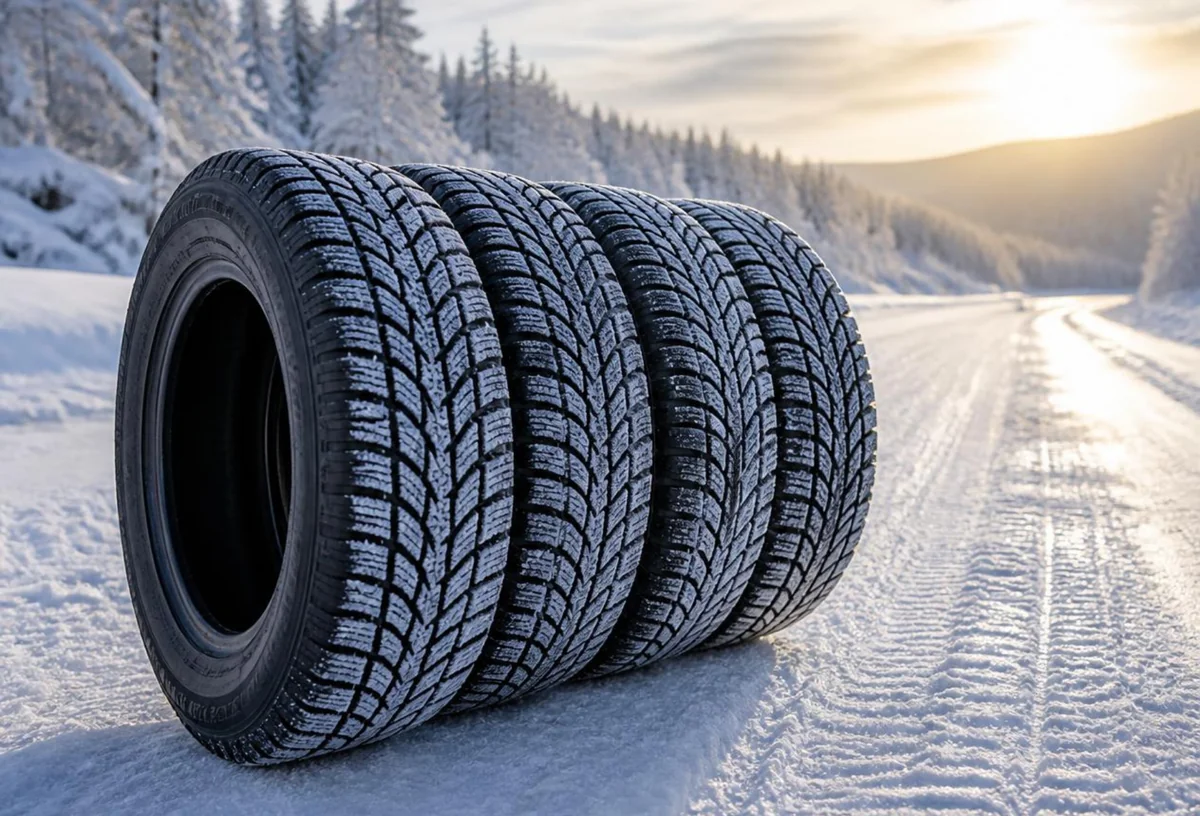
Whether dedicated winter tires make sense depends on driving conditions and how much of the winter is spent on untreated or hilly roads. For drivers who stay mostly on treated Lehigh Valley roads, a good all-season tire with adequate tread is often enough. For drivers who see more rural or hillier routes, a dedicated winter tire provides meaningfully better cold-weather traction than an all-season tire can. We stock Continental, General Tire, and Hankook, and can source most other major brands — Continental purchases are backed by the Continental Total Confidence Plan. If tires are borderline heading into fall, replacing them now, on your schedule, is more predictable than replacing them after the first snap.
BATTERY: WHY COLD WEATHER EXPOSES A WEAK ONE
A battery that starts a vehicle reliably in September doesn’t necessarily start it reliably in January. Cold temperatures reduce a battery’s effective cranking power at the same time that a cold engine needs more of it to start — which is why batteries that are already weakening tend to fail in winter rather than summer, even though the wear that caused the weakening happened all year.
A slower-than-usual crank, dashboard lights that dim briefly when the vehicle starts, or a battery more than three to four years old are all reasons to have it load-tested before cold weather arrives. A load test measures how the battery performs under demand, not just whether it currently holds a charge — a battery can show a normal voltage at rest and still fail a load test, which is the more useful number for predicting whether it’ll get through a cold morning. This is a quick check we can run as part of an automotive diagnostics and repair visit, and it’s worth asking about even if the vehicle hasn’t given any obvious warning yet.
FLUIDS: WHAT’S WORTH CHECKING BEFORE THE TEMPERATURE DROPS
Fluid condition affects how well a vehicle handles cold starts and winter driving, and fall is a reasonable point to confirm a few things are in order.
Brake fluid should be checked on a schedule that follows the manufacturer’s recommendation for your specific vehicle — as a general guideline, every two years or approximately 24,000 to 30,000 miles is common, though this varies by vehicle and isn’t a substitute for what your owner’s manual specifies. Brake fluid absorbs moisture over time, and moisture-contaminated fluid performs less consistently as temperatures swing, which matters more in fall and winter driving than in a dry summer.
Coolant concentration matters too — it’s not just about summer engine cooling. The coolant-to-water ratio determines the lowest temperature the system is protected against, and a mix that’s drifted over time toward more water than it should have can leave a margin that’s thinner than expected once a hard freeze hits.
None of this requires replacing everything on a set schedule regardless of condition. It requires knowing what each fluid’s actual condition is, which is the point of having it checked rather than guessed at.
WHY AN INDIVIDUALIZED SCHEDULE MATTERS MORE IN FALL
A generic one-size-fits-all list — “replace this at this mileage, no matter what” — doesn’t account for how a specific vehicle has actually been driven, what climate exposure it’s had, or what its maintenance history already shows. Two vehicles of the same year and model can be in meaningfully different condition heading into winter, depending on driving patterns and prior service.
That’s why we build a fall inspection around your specific vehicle rather than running down a standard checklist and recommending everything on it. If your tires have plenty of tread and your battery tests strong, we’ll tell you that directly rather than suggesting work that isn’t needed yet. If something is borderline, we’ll explain what it means and let you decide the timing — outside of a genuine safety concern, where we won’t sit on it.
FOR FLEET OPERATORS: THE SAME LOGIC, WITH DOWNTIME AT STAKE
Fall prep matters just as much for commercial fleets, with a sharper cost to getting it wrong. A vehicle that goes down on a cold morning route doesn’t just need a repair — it needs a repair on short notice, often during the exact stretch when scheduling is tightest for every shop in the area. Getting ahead of tire, battery, and fluid checks across a fleet in the fall is a smaller time investment than managing an unplanned breakdown in December. Our fleet maintenance and repair program is built around the scheduling flexibility that commercial operators need, and fall is a practical time to get a fleet’s vehicles through inspection before winter routes start.

WHAT HAPPENS WHEN YOU WAIT
None of the items in this checklist are urgent on their own in September. That’s exactly why fall is the right time to deal with them — nothing here is a same-day emergency yet, which means it can be scheduled on your timeline instead of worked in around a breakdown.
Wait until the first cold snap and the calculation changes. Shops get busier, parts that would have been in stock in October may need to be ordered in December, and a battery or tire that was borderline in the fall has had more time to fail somewhere less convenient than a scheduled appointment. Addressing these items now is a predictable, plannable visit. Addressing them later is often a same-day problem that interrupts whatever else was on the schedule that day.
GETTING YOUR VEHICLE CHECKED
Auto Motors of Lehigh Valley has served drivers and fleets across Whitehall, Fullerton, Allentown, and the broader Lehigh Valley since 1992. A fall check covering tires, battery, and fluids is a straightforward visit, and we’ll give you a clear picture of what your vehicle actually needs without recommending work it doesn’t.
Contact our team to schedule your visit, or call us directly at 610-266-9466. We’re open Monday through Thursday 7am to 5pm and Friday 7am to 4pm, with a drop-off window from 7am to 3pm on weekdays.