


Summer is when transmission problems stop being hypothetical. Stop-and-go traffic on Route 22 pushes fluid temperatures higher than typical highway driving ever does. Longer trips, more idling, and July heat put sustained demand on a system that most drivers never think about until something goes wrong. For a transmission already showing early warning signs, mid-summer is often when those signs become hard to dismiss.
Transmission warning signs are easy to set aside. A slight hesitation when a gear engages, a faint noise at highway speed, a shudder that comes and goes — most drivers notice something feels off and move on without acting. The problem is that transmission issues rarely stay small. What starts as a worn solenoid or degraded fluid can become an internal failure if left long enough, and the cost difference between catching a problem early and catching it late is often significant.
This post covers five transmission warning signs worth taking seriously: what they feel like, what typically causes them, and why acting before the hottest weeks of the year makes practical sense.
WHY SUMMER PUTS EXTRA DEMAND ON YOUR TRANSMISSION
The transmission generates heat during normal operation. Fluid circulates through the system to manage that heat and maintain the hydraulic pressure that controls gear changes. Fluid has limits, though. When ambient temperatures climb and driving conditions shift toward more stop-and-go, that fluid works harder and runs hotter.
Automatic transmission fluid (ATF) breaks down faster at elevated temperatures. As it degrades, it loses its ability to lubricate internal components and carry adequate hydraulic pressure. Sitting in traffic on Tilghman Street in Allentown or idling through road construction on Route 22 puts more strain on that system than moderate highway cruising does.
This does not mean summer driving causes transmission problems on its own. What it does mean is that summer conditions accelerate problems that are already developing. A small fluid leak, a slightly worn clutch pack, or a borderline solenoid that seemed manageable in April may announce itself clearly by mid-July. Knowing what those announcements look and feel like gives you a real opportunity to address them before the problem gets more serious.
1. SLIPPING GEARS
Gear slipping is one of the more recognizable transmission warning signs. In an automatic, it typically feels like the engine revs climb higher than expected before the vehicle accelerates, or like the transmission briefly loses its connection between engine power and forward movement before re-engaging. The sensation can be subtle at first — a slight hesitation or a soft, loose feeling in how the vehicle responds — and becomes more pronounced as the condition develops.
In a manual transmission, slipping usually presents as a loss of drive under load. Hard acceleration, climbing a hill, or towing can expose a clutch that no longer has enough friction material to fully transfer engine power to the drivetrain. The engine revs, but the vehicle does not accelerate proportionally.
Slipping in an automatic can result from low fluid, worn clutch packs, fluid contamination, or a failing solenoid. These causes vary considerably in repair scope. A solenoid replacement is a different job than addressing worn clutch packs, and how extensive the repair is depends largely on how far the condition has progressed before diagnosis. Early attention typically means fewer components involved and a smaller repair.

2. DELAYED OR ROUGH SHIFTING
A healthy transmission shifts smoothly and without drama. If you notice a hesitation before Drive engages from Park, a clunk or jolt between gear changes, or harsh downshifts under light braking, the transmission is not operating the way it should.
Delayed engagement from Park to Drive is a common early symptom. The vehicle sits for a beat before moving, which many drivers attribute to normal variation and ignore. What that hesitation often reflects is the transmission taking longer than it should to build hydraulic pressure — which points to fluid condition, internal wear, or both.
Rough shifting between gears, particularly if accompanied by a shudder or jolt, can point to a failing valve body (the component that regulates hydraulic pressure for gear changes), worn clutch bands, or electronic control problems. A transmission that shifts harshly at light throttle, or that seems to hunt between gears more than usual, is signaling that hydraulic pressure is not being managed correctly.
These symptoms are common early indicators. They also tend to worsen with heat. Summer driving, with its higher fluid temperatures and additional load, often makes intermittent rough shifting more consistent and easier to notice.
3. UNUSUAL NOISES
Transmission noise varies by what is failing and what type of transmission is involved. The key is distinguishing sounds that are clearly coming from the transmission versus sounds from other drivetrain components.
In an automatic, whining or humming sounds that change pitch with vehicle speed can indicate bearing wear, internal pump issues, or fluid that has degraded past the point of providing adequate lubrication. A clunking sound that occurs during gear changes, rather than at steady highway speed, tends to point toward mechanical wear on components that engage and disengage with each shift.
In a manual transmission, a consistent buzzing or humming that is present in neutral with the clutch out often indicates an input shaft bearing. A noise that changes or disappears when you press the clutch pedal is a useful distinguishing clue when trying to isolate where a sound is coming from.
Any noise that consistently appears to originate from the transmission area during normal driving is worth having diagnosed. These sounds do not improve on their own, and they generally become more pronounced as the condition worsens.
4. FLUID CONDITION AND LEAKS

Transmission fluid does for the transmission what engine oil does for the engine: it lubricates internal components, cools the system under load, and provides the hydraulic pressure that makes gear changes possible. The condition and level of that fluid has a direct effect on everything the transmission does.
Healthy automatic transmission fluid is typically clear to light red in color with a faint, slightly sweet smell. Dark brown or black fluid indicates oxidation and heat damage. A burnt smell is a reliable sign that the fluid has been operating at temperatures it was not designed to sustain over an extended period. Fluid in either of those conditions has lost the protective properties it needs to do its job, and continuing to run on it adds wear to every component the fluid is supposed to protect.
A drop in fluid level points to a leak somewhere in the system. Transmission fluid typically appears red, pink, or brownish beneath the vehicle depending on its age and condition — it is slicker than motor oil and will leave a distinct stain on pavement if the leak is significant. Low fluid leads to inadequate hydraulic pressure, increased operating temperature, and accelerated internal wear.
One practical note: many older vehicles have an accessible dipstick for checking transmission fluid level from the engine bay. Many newer vehicles have sealed units that require professional service equipment to check properly. If you’re not sure which applies to your vehicle, it’s worth asking about fluid condition as part of your next routine vehicle maintenance visit.
5. DASHBOARD WARNING LIGHTS
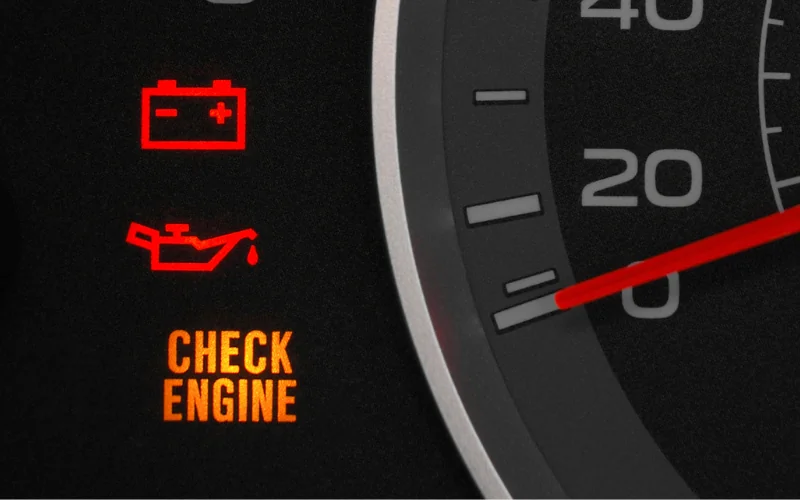
The check engine light can illuminate for transmission-related diagnostic trouble codes, and some vehicles also have a dedicated transmission temperature or warning indicator. Either one is worth taking seriously.
A P0700 code indicates a general transmission control system malfunction and serves as a prompt to look further for more specific codes identifying the component or circuit involved. Other codes can point to solenoid circuit faults, speed sensor problems, gear ratio errors, or torque converter issues. The code identifies the area of concern; a proper inspection with a technician determines the actual cause.
A common mistake is clearing a warning light without reading the stored codes, or assuming the problem resolved itself because the light went off temporarily. Intermittent codes can indicate early-stage issues that become more consistent as a condition progresses. When you bring a vehicle in for automotive diagnostics and repair, the scan reads both active and stored codes, which gives a clearer picture of what has been happening with the system over time.
WHAT HAPPENS WHEN YOU WAIT
The practical case for addressing transmission warning signs early comes down to how repair costs scale with damage.
A transmission solenoid that is starting to fail is a targeted repair. That same vehicle, driven with the failing solenoid until it causes hydraulic pressure loss, elevated heat, and secondary wear on the clutch packs and valve body, becomes a substantially larger job. The solenoid did not get more expensive to fix because time passed. It got more expensive because the primary failure created secondary damage.
Fluid that has broken down due to heat and age follows the same logic. A fluid exchange is a straightforward, relatively inexpensive service. A transmission that has been operating on degraded fluid long enough to cause internal wear needs more than a fluid change to make it right.
This is not meant to alarm — it is the mechanical reality of how these systems fail. Most early-stage transmission problems are manageable. Many late-stage ones are not. The difference between the two usually comes down to whether the warning signs were addressed when they first appeared or were allowed to develop through weeks of summer driving.
WHY SPECIALIST REPAIR MAKES A DIFFERENCE
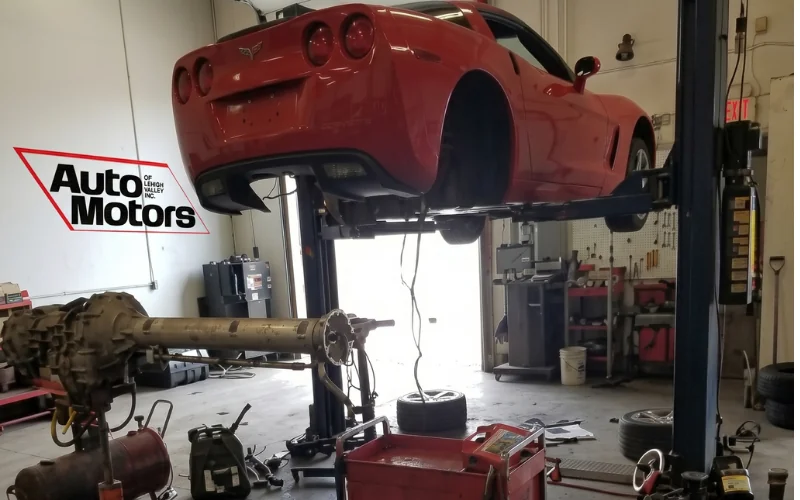
Most independent repair shops do not perform transmission work in-house. When a vehicle comes in with a transmission concern, the standard outcome at a general shop is a referral elsewhere — which means additional scheduling, additional diagnostic fees, and the inconvenience of working with a second shop.
Auto Motors of Lehigh Valley was built around engine and transmission repair. It is the core of what we do, and it has been since 1992. Our technicians perform this work in-house on domestic and foreign vehicles. As a preferred Jasper Engines and Transmissions supplier for more than 30 years, we have access to remanufactured units backed by a 36-month/100,000-mile nationwide parts and labor warranty on most products. OEM remanufactured units from Ford, GM, and Chrysler/Jeep/Dodge carry equivalent coverage. For drivers who prefer a low-mileage used unit, those are available with up to a 36-month parts and labor warranty as well.
If your vehicle has been showing any of the signs described above, a diagnostic appointment is the right next step. We serve drivers across Whitehall, Fullerton, Allentown, and the broader Lehigh Valley.
Contact our team to schedule your visit, or call us directly at 610-266-9466. We’ll give you a clear picture of what your vehicle needs without unnecessary upselling.